
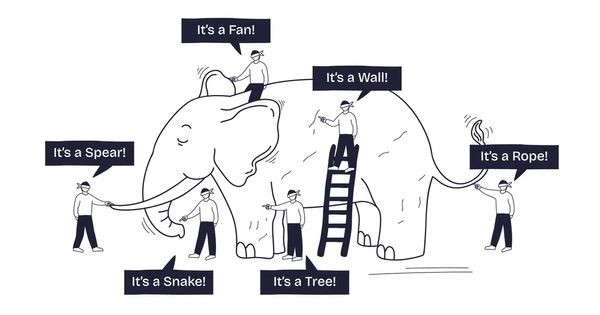
“Six blind men once encountered an elephant. Each touched a different part—trunk, leg, ear, tail, tusk, body —and each described it differently: a rope, a pillar, a fan, a wall, a spear and a wall. They argued endlessly, each convinced his truth was the whole truth.”
In organizations, employees often experience culture in the same fragmented way.
> One sees culture through policies.
> Another through team dynamics.
> A third through leadership style.
> Others through rewards, recognition, or compliance frameworks.
Each perspective is valid, but incomplete. Left unchecked, these fragmented views can create confusion, silos, and even conflict—just like the blind men quarrelling over the elephant.
That’s where the manager steps in.
> A manager’s role is to connect the fragments and help employees see the whole elephant—the unified culture.
> They communicate values clearly, ensuring no one mistakes the “tail for the whole.”
> They align diverse perspectives with organizational goals, so every employee feels part of something larger.
> They mediate conflicts by showing the bigger picture, turning competing truths into a shared vision.
A manager is not just a supervisor of tasks—they are the custodian of culture.
Without them, employees may only see parts of the elephant. With them, the organization can move forward with clarity, unity, and purpose. Do you Agree?
#employeerelations; #corporateculture; #managersresponsibility; #employeeengagement