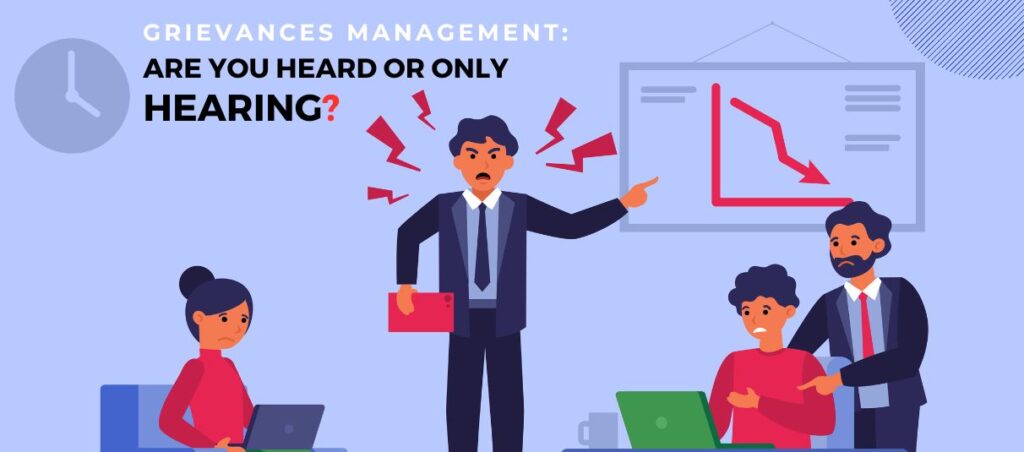

“Workplace conflict” is a common employee relations issue. On average, managers spend more than 4 hours a week dealing with conflict, but nearly 1 in 4 people think their managers handle conflict poorly.
Tension and disagreements trigger discontent in the workplace. Having formal procedures in place and ER professionals to guide the process can keep conflict from escalating and breeding negativity.
Also, taking problems and employee complaints seriously by investigating allegations of misconduct or harassment demonstrates that an employer is committed to preserving a healthy work environment for everyone.
How do you identify existence of Workplace conflict in your team –
Lookout for following examples in your team to identify existence of Workplace conflict in your team.
Absenteeism
Insubordination
Employee misconduct
Workplace health and safety
Lack of Hurmonious relationship among team members.
Effective Employee Relations Strategy
At the foundation of the employee-employer relationship lies a social and psychological connect. This connect consists of beliefs about reciprocal obligations between the two parties. Too often, employees perceive that their organization has failed to adequately fulfill that connect.
These perceptions, whether accurate or not, will reduce employees’:
Trust, Job satisfaction, Intention to remain with the organization, Sense of obligation, In-role and extra-role performance
1. Ensure honest communication by the management and by the manager.
2. Promote the company’s vision – frequent communication on company’s vision.
3. Trust people – Don’t micro-manage employees. They want to be empowered to manage their work and make decisions.
4. Improve recognition and appreciation.
5. Invest in your people.
6. Foster DEIB
7. Consider legal aspects of employee relations – be fair to employees.
8. Monitor employee relations matters.
9. Have an employee relations policy in place.
The two key principles of successful employee relations management are:
Keep your promises: Don’t oversell the opportunities the company has to offer to candidates or employees. This will lead to disappointment and all of the other negative effects mentioned above.
Be both clear and honest in your communication: Poor communication can lead to conflict. If, for some reason, you realize that you won’t be able to fulfil a certain obligation, be honest about it and inform people sooner rather than later.
Since employees are the engine of any organization, you want to make sure that both employee-employer and cross-employee relations are well maintained.
Effective employee relationship management translates into the following advantages:
• More effective workplace communication.
• Less workplace conflicts.
• Higher employee morale and loyalty.
• Better reputation as an employer.
• Lower employee turnover.
• Improved organizational performance.
Have you witnessed any employee conflict at your workplace?
#EmployeeRelations, #EmployeeConflict, #Employeegrievance